

Bartholomew's Secret
“Do not let this book come into the hand of any man who is an unbeliever and heretic. Behold, this is the seventh time I have commanded you, O my son Thaddaeus, concerning these mysteries. Do not reveal them to any impure man, but keep the safely.”
-Saint Bartholomew the Apostle to his son Thaddaeus
In 1990, Frank Meshberger, a physician from Anderson, Indiana stood inside the Sistine Chapel and noticed something that no one else had ever seen in the 507 years since the Chapel was first opened.
In 1473, Pope Sixtus IV commissioned the construction of the chapel that now famously holds the conclave where each new pope is elected. But it wasn’t until 1508 that the great sculptor, Michelangelo began painting the nine central panels of the chapel’s ceiling.
More than five centuries later, Dr. Meshberger stood inside the walls of the Vatican with his neck craned backwards to see the world-famous ceiling for himself.
On each panel, Michelangelo frescoed a different scene from the Bible’s Book of Genesis. On the sixth panel, you’ll find the story of the Garden of Eden. On the eighth panel you’ll see the story of Noah’s Ark and the great flood. But it was the fourth panel that caught Meshberger’s eye.
The fourth panel of the Sistine Chapel’s ceiling is one of the most famous paintings in the world, The Creation of Adam.
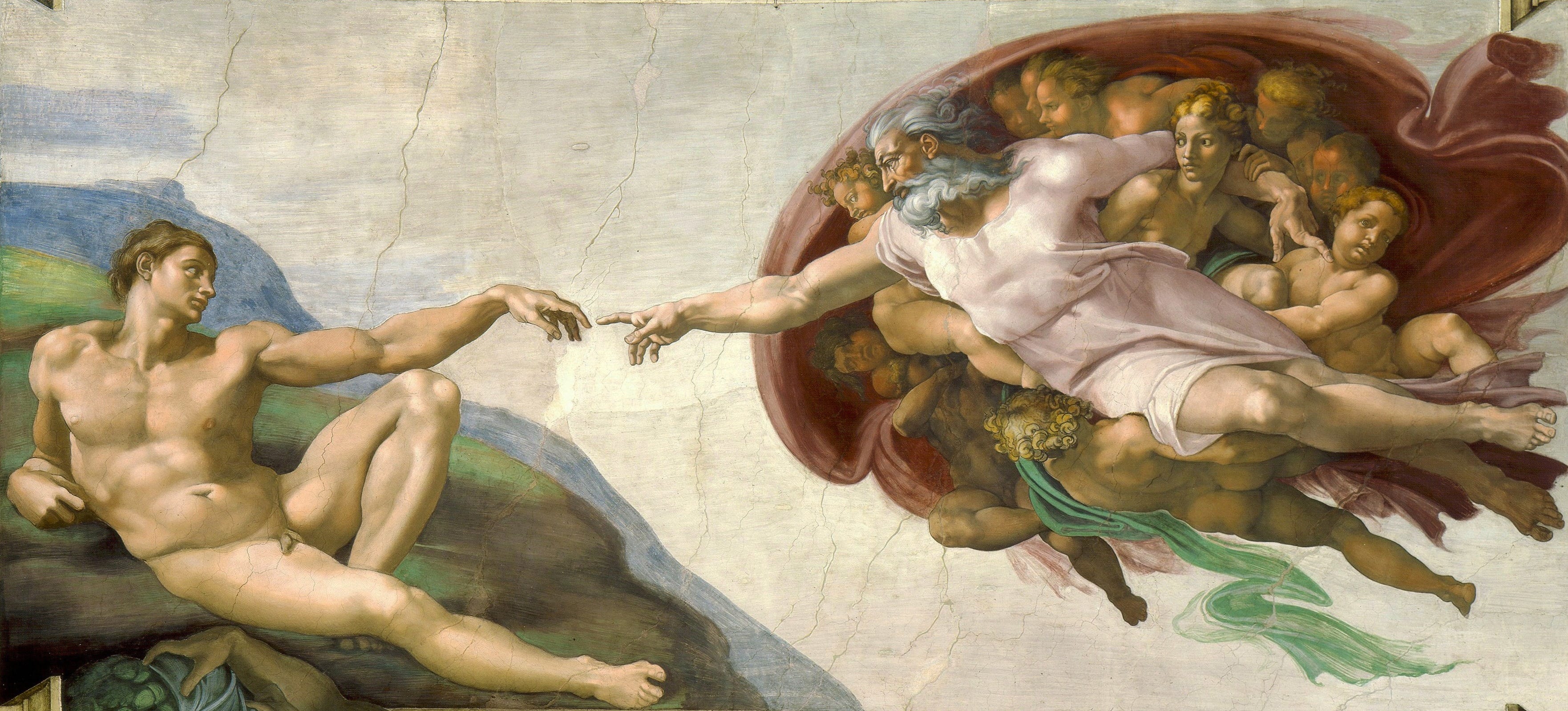
“The creation of Adam shows Adam and God reaching toward one another, arms outstretched, fingers almost touching,” Meshburger writes.
While the entire world is familiar with this depiction, there was something else about the painting that caught Meshberger’s attention.
In the image, God is encased in a uniquely shaped, pink drapery.
“I believe there is a third ‘main character’ that has not previously been recognized,” Meshberger continues.
That pink drapery, the physician points out, is an exact, anatomical replica of the human brain.
In October of 1990, Meshberger published his findings in the Journal of American Medical Association and invited the readers to see for themselves.
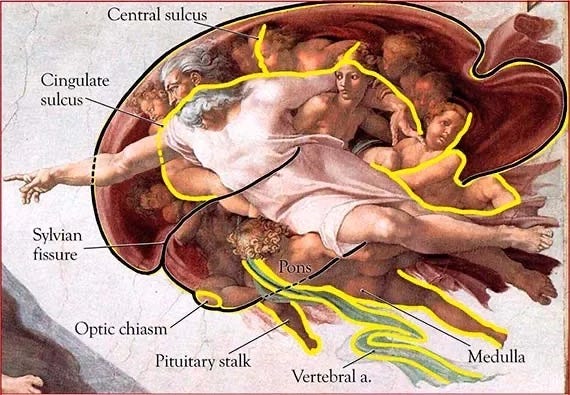
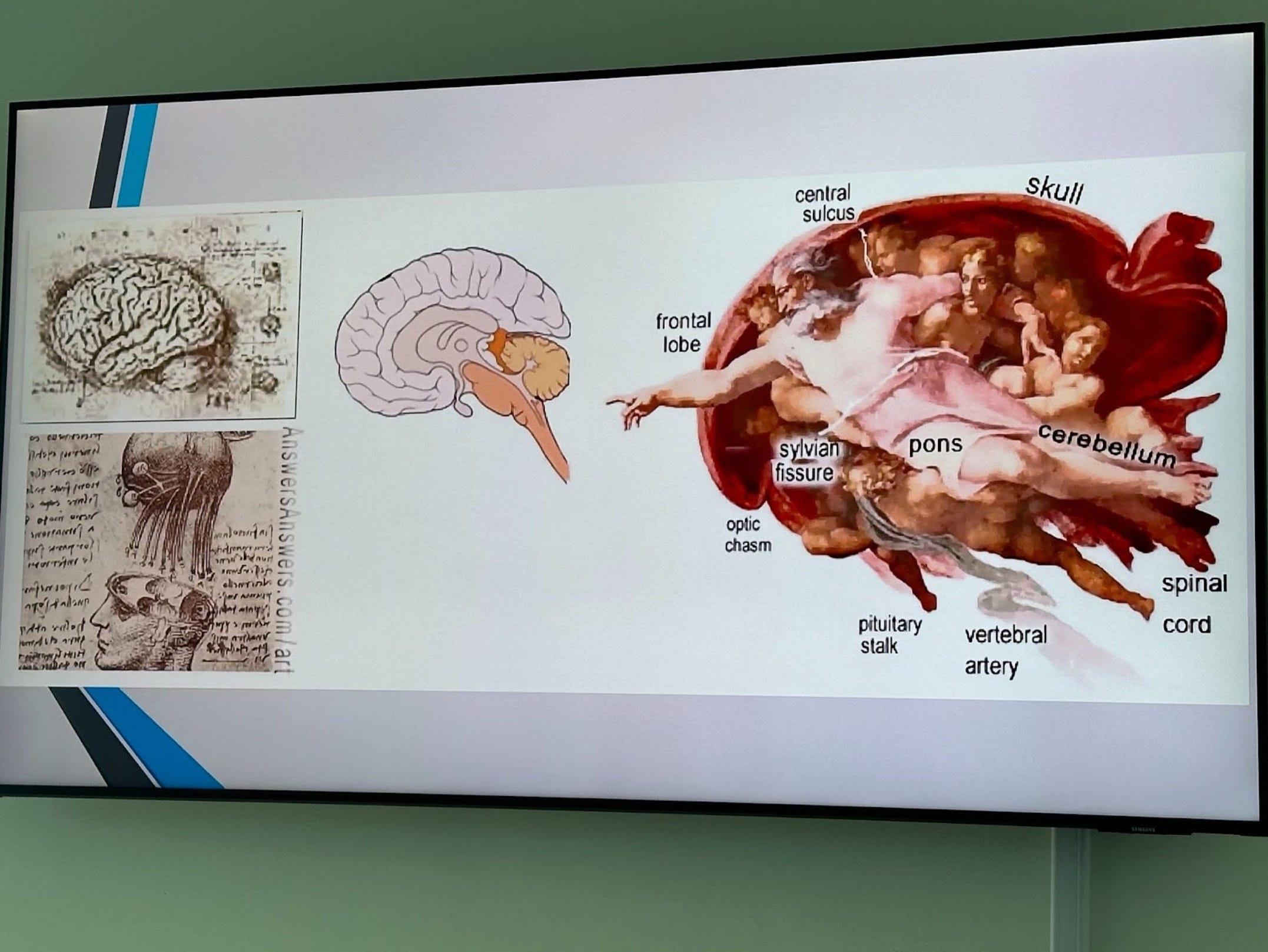
Despite its striking resemblance, one might argue that this is merely a coincidence.
But in 1550, Giorgio Vasari, an acquaintance and biographer of Michelangelo wrote in his book, Lives of the Most Excellent Painters, Sculptors and Architects, “Michelangelo took part in a human dissection at the Santo Spirito hospital in the 1490s … ‘in flaying dead bodies, to study anatomical matters, [he] began to perfect the great sense of disegno that he later acquired.’”
He continued, “there is no animal whose anatomy he would not dissect, and he worked on so many human anatomies that those who have spent their lives at it and made it their profession hardly know as much as he does.”
In his late teenage years, Michelangelo began dissecting human cadavers and by the time he reached his thirties, he had completed hundreds of anatomical sketches, some of which still survive today.
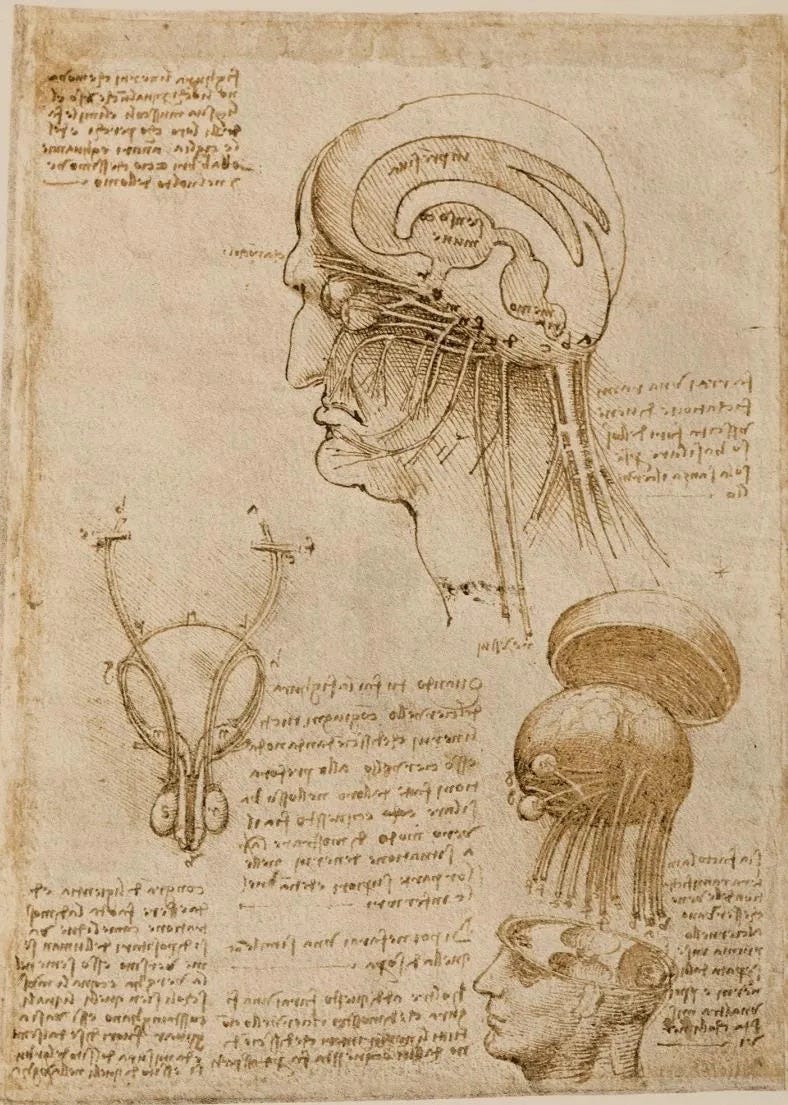
For someone with such a rich history in the anatomy of the human body, it seems unlikely that Michelangelo accidentally painted an exact replica of the human brain in “The Creation” fresco.
However, skeptics might remain.
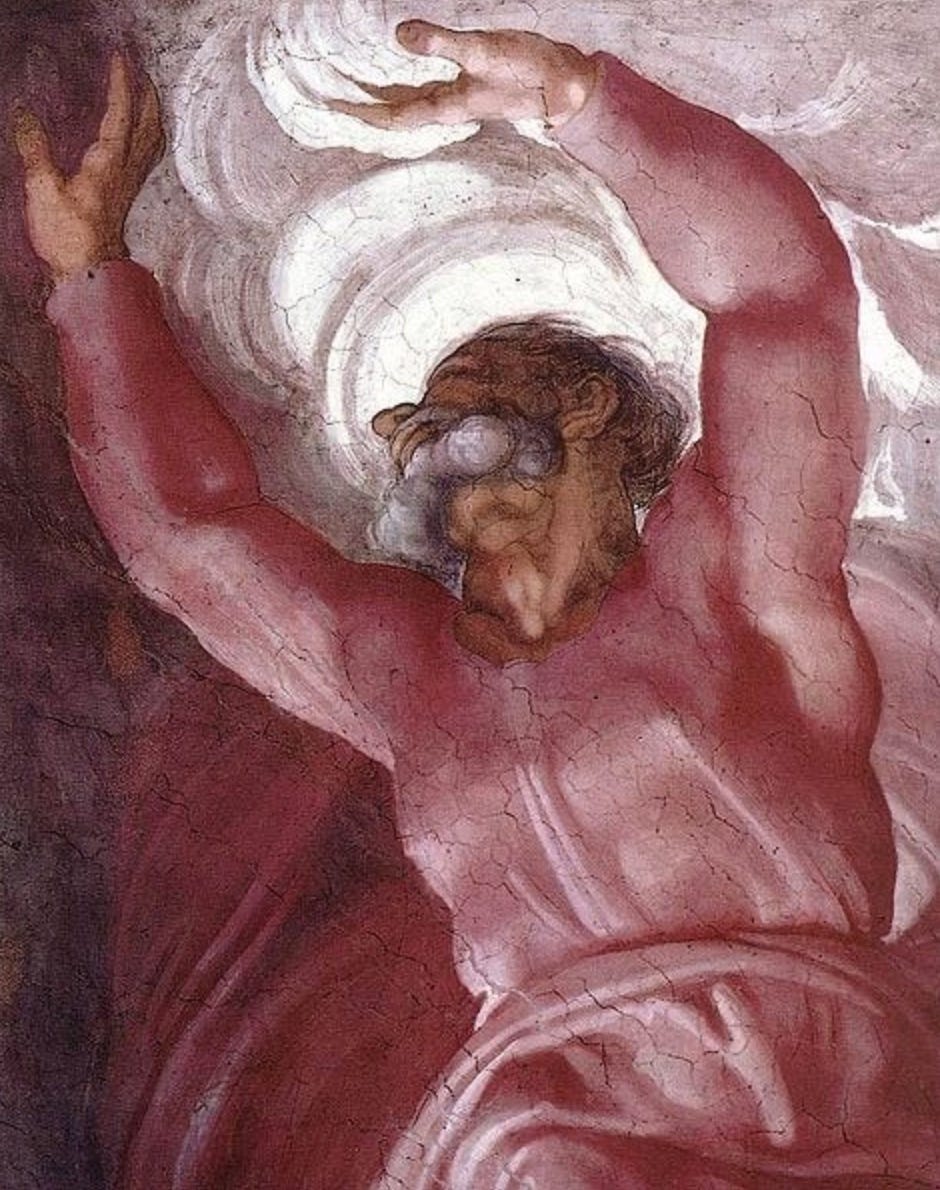
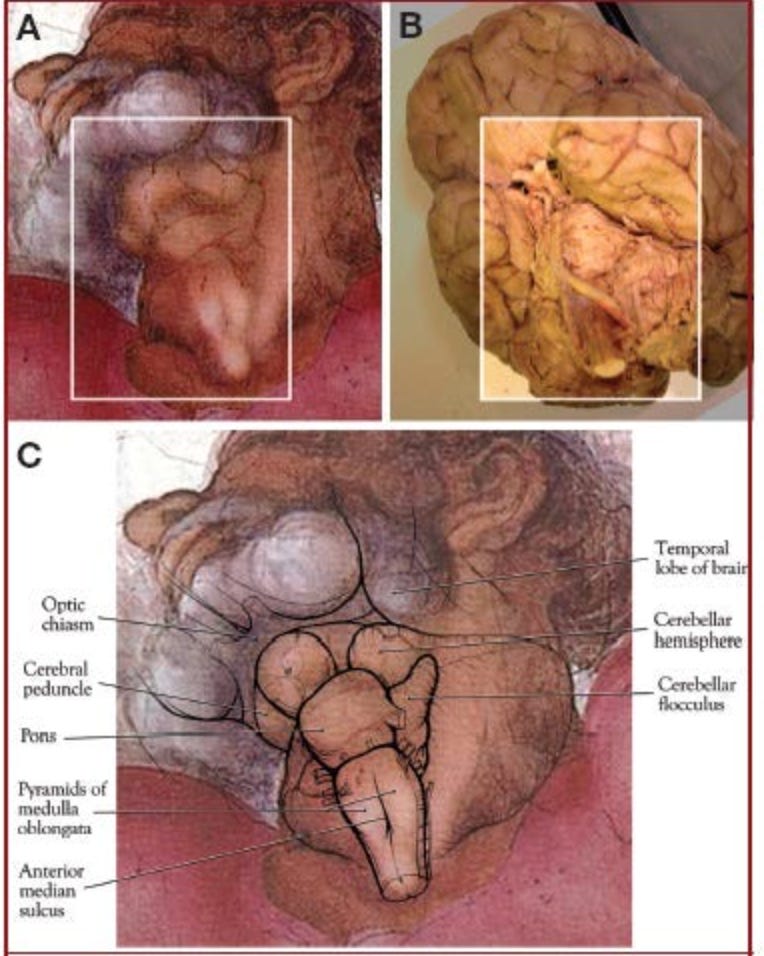
In 2010, however, Rafael Tamargo and Ian Suk from Johns Hopkins University took a closer look at the very first panel on the Chapel’s ceiling, The Separation of Light from Darkness, and found another exact anatomical replica of a nervous system structure.
When they looked at God’s neck in the image, they noticed an unusual bulge. When overlaid with an anatomical diagram, the contours perfectly match the ventral view of the human brainstem including the pons, medulla oblongata, spinal cord and even the optic chiasm.
This was no amateur artist doodling on a cocktail napkin. This was one of history’s greatest minds.
“He was a genius for god sake!” Jordan Peterson says.
But even if you STILL contended that this was just a matter of happenstance and confirmation bias, you’d have to contend with the fact that Michelangelo was known for hiding secrets in the plain sight of his art.
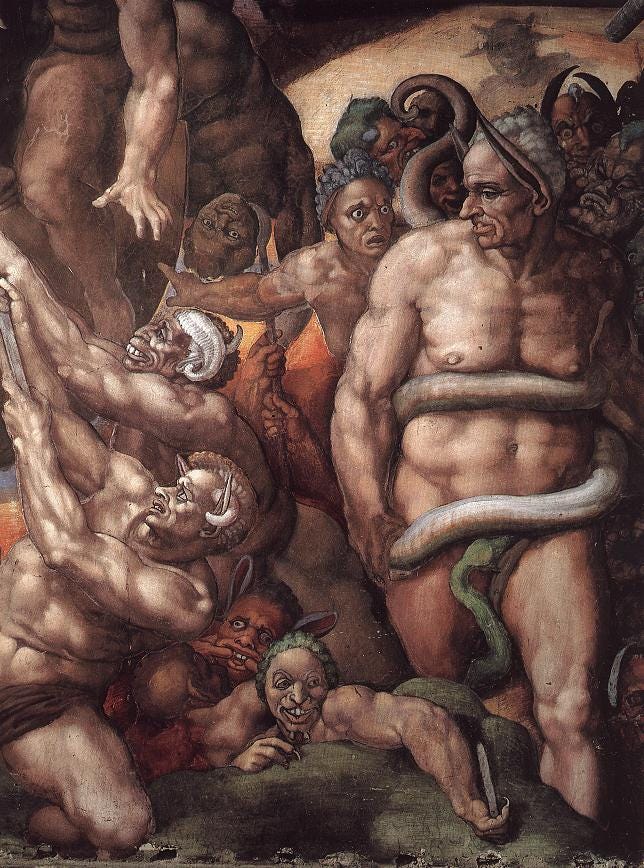
When the Sistine Chapel was first set to open in 1512, the Vatican hosted a private showing of Michelangelo’s work in which the Pope’s Master of Ceremonies, Biagio da Cesena disparaged the painter’s hard work, “It was most disgraceful that in so sacred a place there should have been depicted all those nude figures, exposing themselves so shamefully, and that it was no work for a papal chapel but rather for the public baths and taverns.”
Michelangelo returned the favor by painting Cesena’s portrait on the back wall of the Chapel, as one of the souls damned to hell. He even included a serpent feasting on Cesena’s private parts as part of the depiction.
And in that very same painting, it is believed that Michelangelo secretly included his own self-portrait.
On the altar wall of the Sistine Chapel is a painting called, The Last Judgement. The painting spans the entire wall and shows the return of Jesus Christ and the resurrection of the dead who have arrived at their judgement day. You can see throughout the painting, souls ascending to heaven as well as the damned (including Cesena) being ushered to hell.
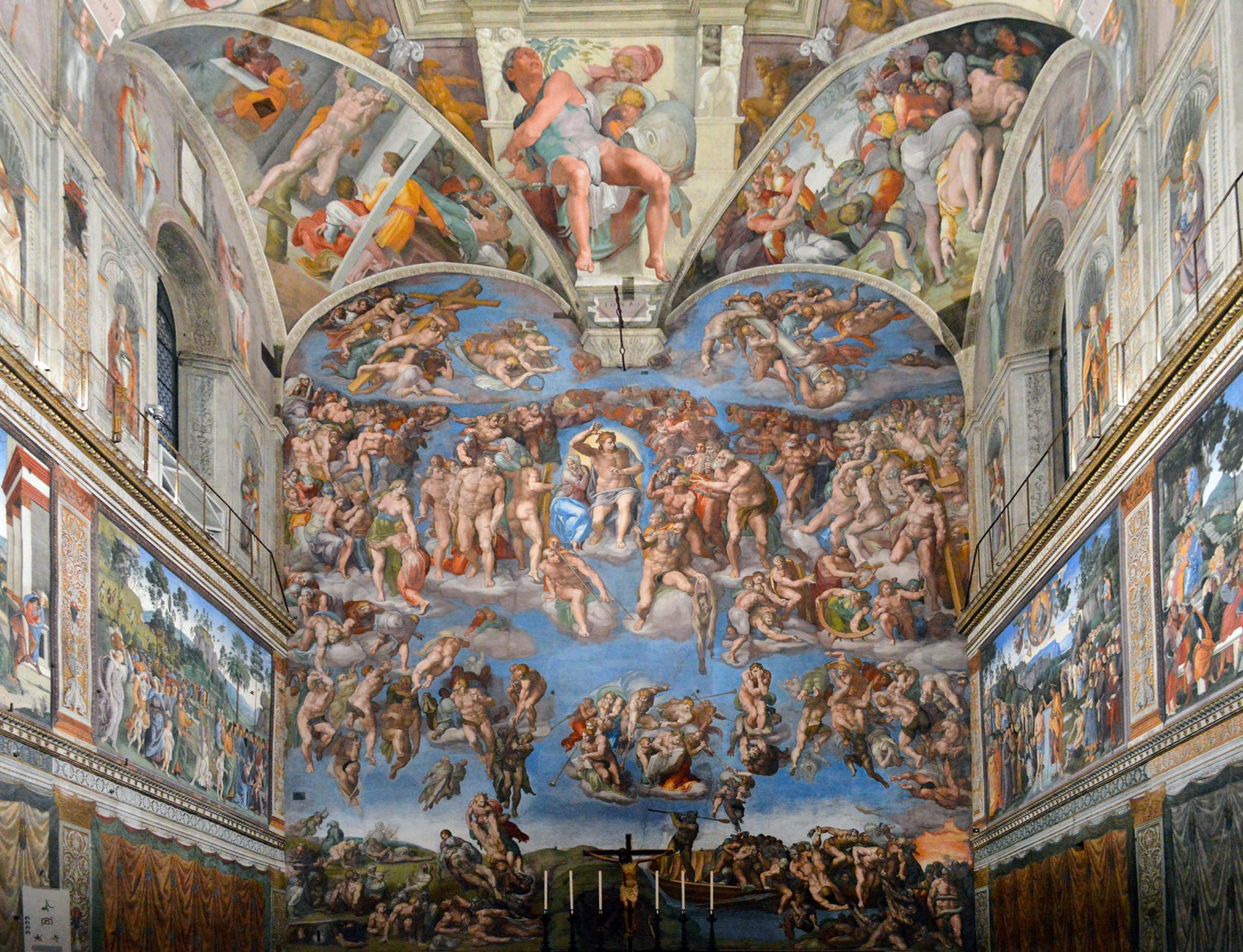
Near the top of the image, just below Jesus is Saint Bartholomew who is seen holding his own skin.
Bartholomew, one of Jesus’ disciples, traveled to India after Christ’s death to spread Jesus’ message. There, he cast out demons and subverted many of their gods. During his mission, he was charged with coercing a King to abandon his god, who subsequently sentenced him to death by flaying his skin.
In most depictions of Bartholomew, he is seen holding his own skin.
But in this particular image, it is believed that Michelangelo painted his own self-portrait on the skin held by Saint Bartholomew.
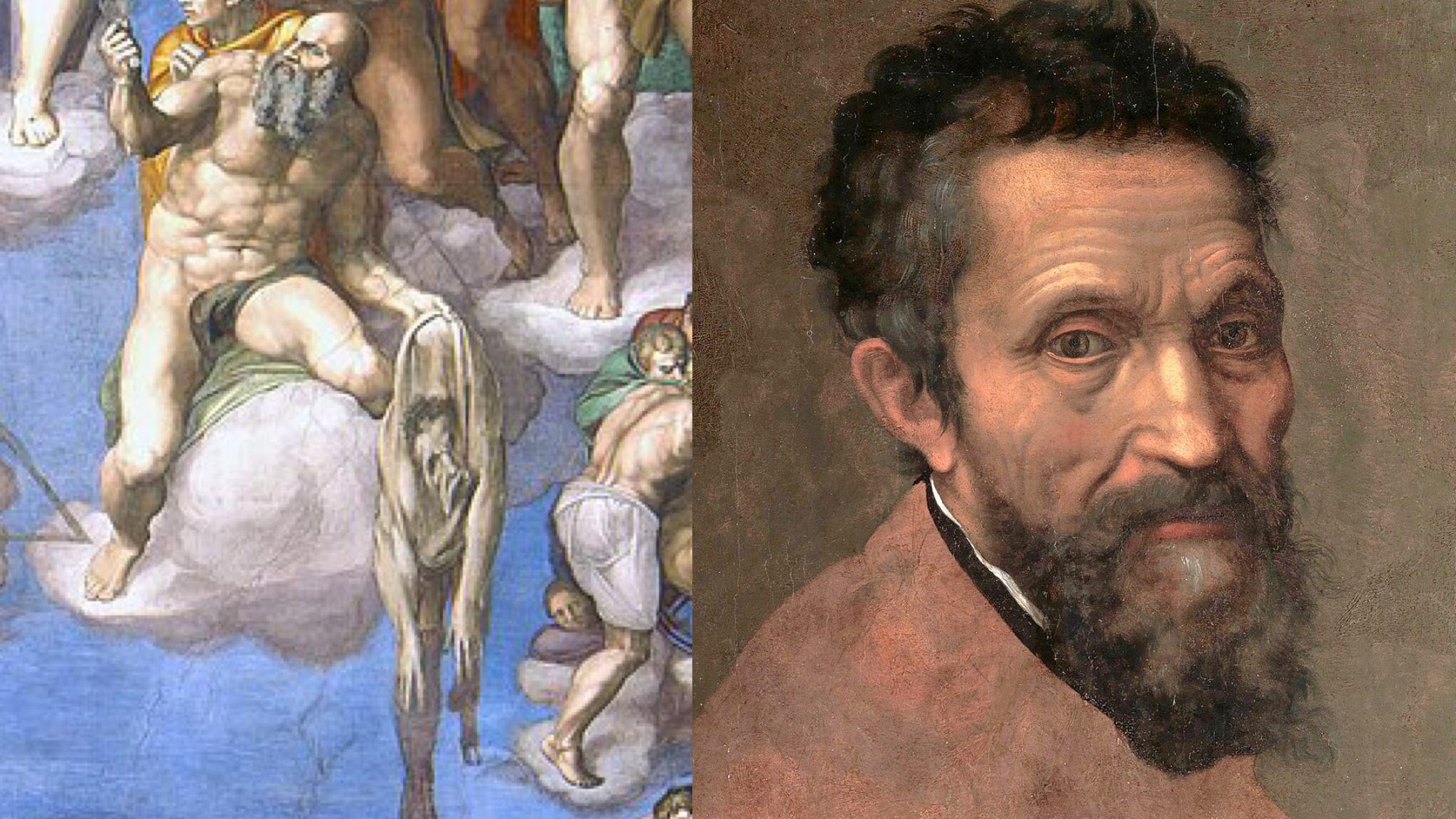
Who was Saint Bartholomew?
Bartholomew’s mission has earned him the unofficial title of Patron Saint of the Nervous System.
In fact, at the Duomo in Milan, a statue of Bartholomew stands with his nervous system exposed (and holding his skin of course).
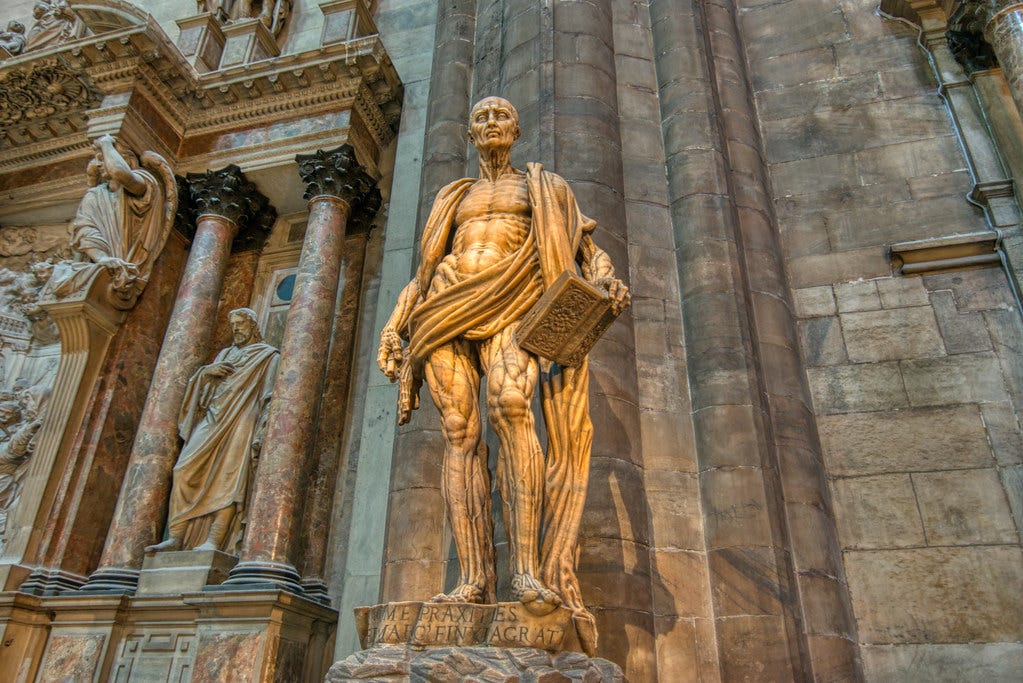
His flayed skin has become representative of the removal of false identities and the revealing of your true self.
This is the Secret of Saint Bartholomew.
What Saint Bartholomew revealed through his work was how to conquer the nervous system. How to conquer the self.
Through years of working with chronic pain clients, I have discovered that the brain and nervous system’s influence over pain is nothing short of profound.
In the presence of fear, self-doubt, anxiety, depression or any mental chaos, the healing powers remain behind lock & key.
The nervous system must grant permission for the pain signal to be removed.
“Now blessed Bartholomew came to the door of the house in the guise of a pilgrim and begged ins
In one story, Bartholomew, disguised as a beggar walked up to the house of one his disciples and asked the following question.
“Where on earth was the place, measuring not more than a foot, where God manifested the greatest miracles?”
A woman inside responded, “it is in the human head, in which the world exists, as it were, in miniature.”
The apostle approved. 1
The secret that Bartholomew had worked so hard to uncover and was so cautious to not let it fall into the wrong hands was the secret to conquering the nervous system.
Read This Next
The Missing Link to Lasting Chronic Pain Relief: Get an overview of neuroscience and learn how it operates as the gatekeeper to your pain.
Further Reading:
If you want to see how this framework is actually applied, I’ve documented it in my book. I’ll send you a complimentary copy here.
Jacobus de Voragine. The Golden Legend: Readings on the Saints. Translated by William Granger Ryan, vol. 2, Princeton University Press, 1993, p. 500.