

Understanding Knee Pain
Why Rotation, Posture, and the Nervous System Matter More Than Your MRI

“I never ever want to feel pain again.”
I received this message from a client this morning. While I certainly understand and share the same wish, this is not the reality of living with a human body.
Pain is a normal part of life. It shouldn’t stick around for very long, but all of our bodies have particular vulnerabilities that will cause pain to kick in from time to time.
When I worked in the NBA, most players had something that they were always keeping an eye on. I can remember one player that constantly had a shoulder that gave him trouble. All of his warm-ups and programs made a point to put extra emphasis on that shoulder.
I am no different.
I spent two decades of my life playing high-level basketball and that strain took a toll on my body and exposed a few vulnerabilities.
For me, I am always emphasizing my right achilles and my right knee. I want to perform at a high level, which means I have to train at a high level. To do this, I need to put an extra focus on these weak spots to make sure I can sustain that level of effort.
The knee has been a particular focus for me because I do a lot of running. I always tell my clients that running is just a hard thing to do properly so as any of us increase our mileage, the knees become more and more vulnerable.
It was also a major focus of mine when I was working for the Lakers because over the course of the 82-game season with all that running and jumping, the knees were a MAJOR concern for us on a daily basis.
After all those miles and all those years, here is what I learned about knee pain:
Why Your Knee Still Hurts
The knee is one of the most misunderstood joints in the body.
It looks simple. It bends and it straightens. That’s it.
But structurally, the knee is the meeting point of two massive bones: the femur above and the tibia below. When people say they have “bad knees,” what they are usually experiencing is not a knee problem at all. It is a relationship problem between those two bones.
And relationships are built on movement.
More specifically, rotation.
The Rotational Problem No One Talks About
The knee does not just flex and extend. It also has to manage rotation coming from above and below.
When the femur internally rotates, the tibia often compensates by externally rotating. That opposing twist creates torsion at the knee joint. Over time, that torsion becomes pain.
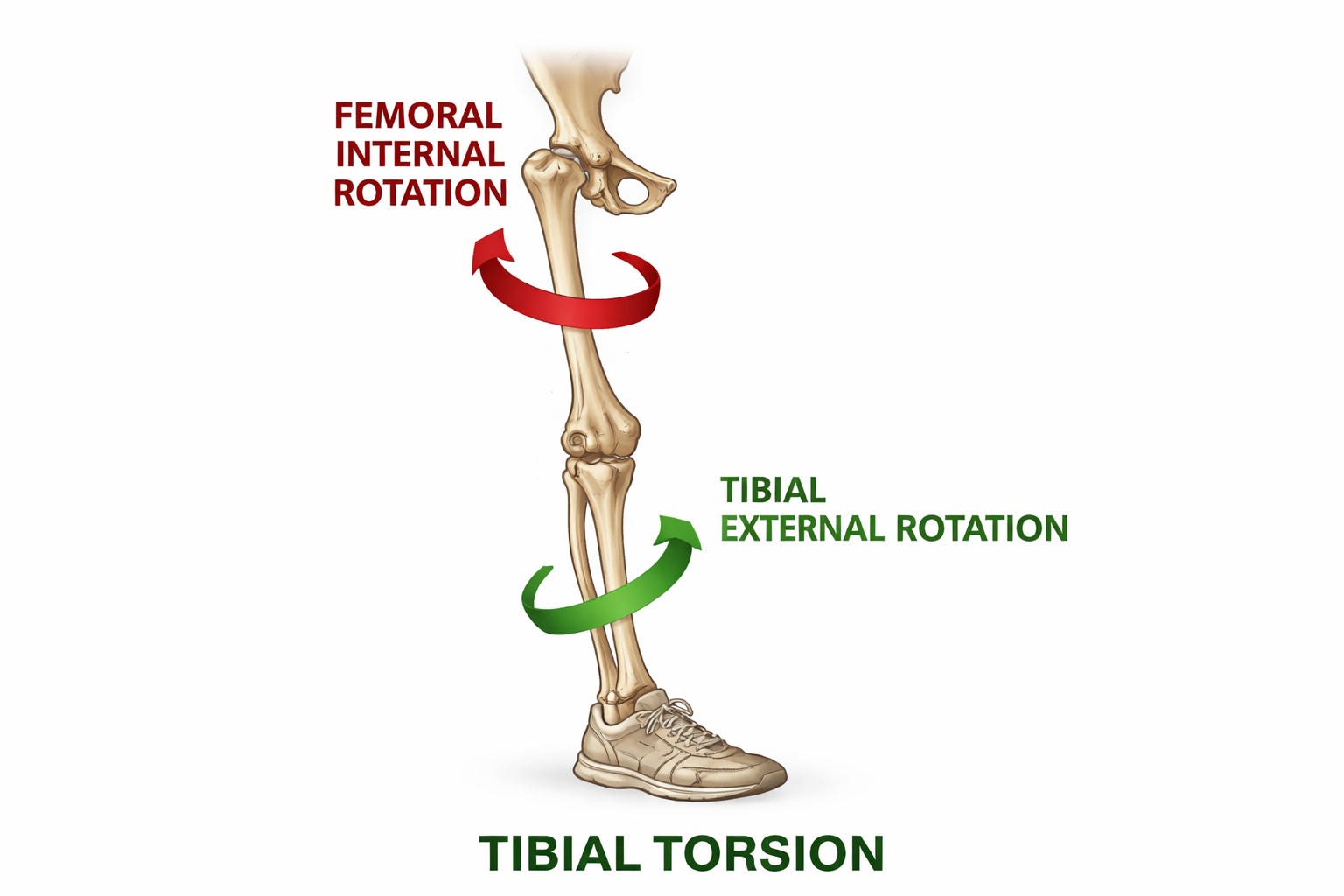
This twisting force is one of the primary drivers of chronic knee discomfort.
Most treatment plans ignore this entirely. They strengthen the quads. They stretch the hamstrings. They ice the joint.
But if rotational mechanics are off, none of that will matter.
The Real Culprit: The Vastus Lateralis
Many people with knee pain are told they have a tight IT band.
In reality, the IT band itself does not contract. It is not a muscle. It is a dense piece of connective tissue.
The real issue is usually the muscle underneath it: the Vastus Lateralis.
The Vastus Lateralis is one of the four quadriceps muscles, and it has a powerful influence on femoral rotation. When it becomes overactive, it acts as a compensatory internal rotator of the femur. That internal rotation feeds directly into the torsion problem at the knee.
In my clinical experience, an overactive Vastus Lateralis is the single most common sources of knee pain.
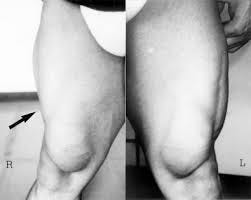
This is why, for most knee pain cases, we start by foam rolling the Vastus Lateralis. If there is immediate relief, we have strong evidence that we are dealing with a rotational imbalance driven by this muscle.
It is not magic. It is mechanics.
The Foot: The Foundation of the Problem
The next place we look is not the knee at all.
It is the foot.
If the foot is collapsing inward, also known as pronation, that collapse travels up the chain. The tibia rotates inward. The knee follows. The femur compensates.
What started as a small change at the arch becomes a persistent stress at the knee.
The more walking, standing, and running someone does on a collapsing foot, the more that pattern becomes cemented into the system.
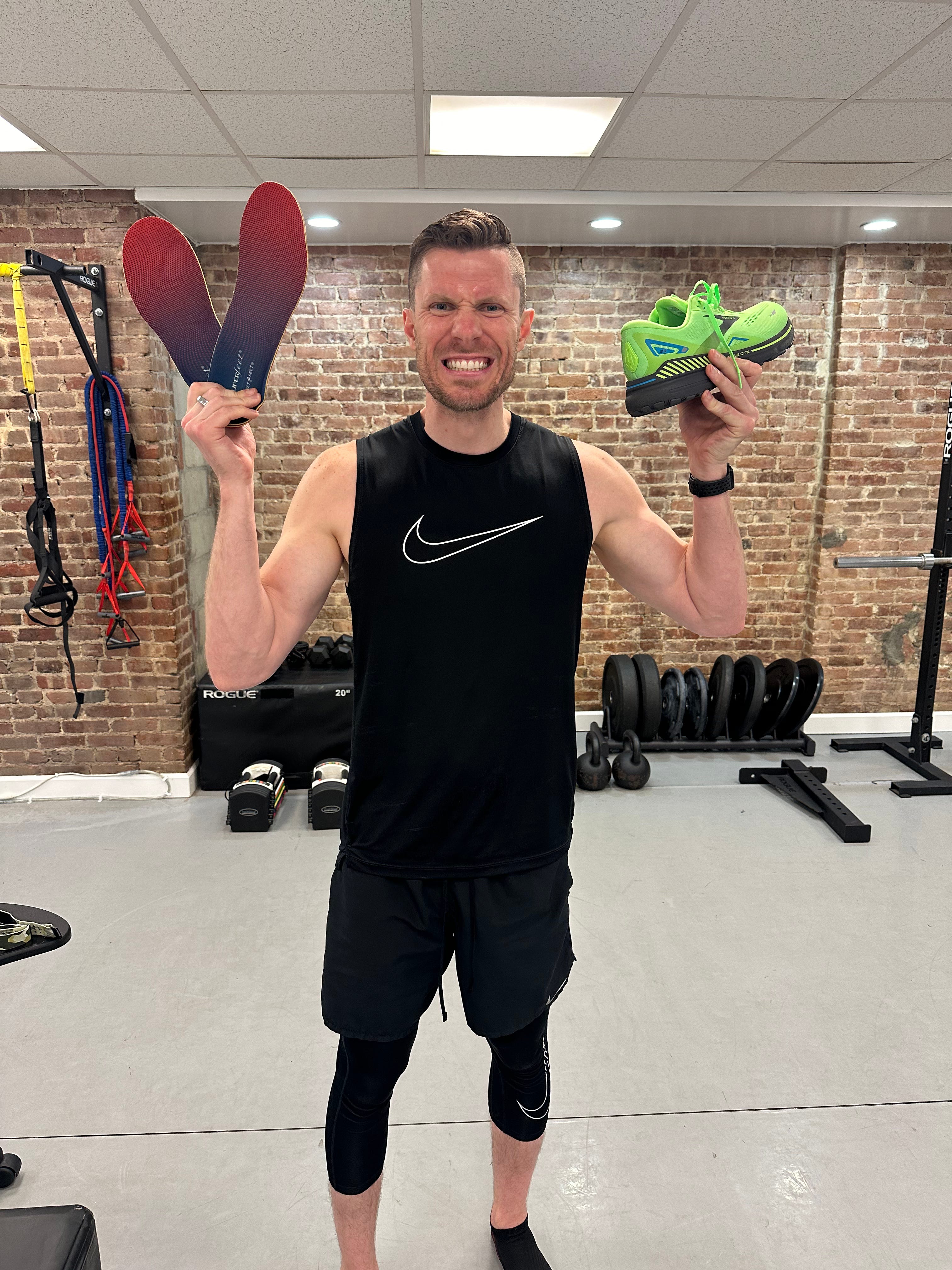
Knee pain clients almost always need to address their footwear and support structure. Ignoring the foot while trying to rehabilitate the knee is incomplete at best and irresponsible at worst. The foundation matters.
Quadriceps Imbalance and the Patella
All four quadriceps muscles converge into a single tendon that runs over and under the kneecap.
The Vastus Lateralis, Vastus Medialis, and Rectus Femoris each exert their own directional pull on that tendon.
If one is significantly stronger or more active than the others, the kneecap can be pulled slightly off its ideal tracking path. This can create patellofemoral pain, especially during squatting, stair climbing, or prolonged sitting.
That said, true patellar tracking problems are less common in my practice than an overactive Vastus Lateralis and rotational dysfunction. Still, quad balance must be assessed and corrected when necessary.
The Hamstrings and Internal Rotation
The hamstrings also play a role in this rotational story.
There are three primary hamstrings, and each has a rotational influence on the femur. Only the inner hamstring meaningfully assists with internal rotation of the femur. In many people, this is the weakest and least active of the group.
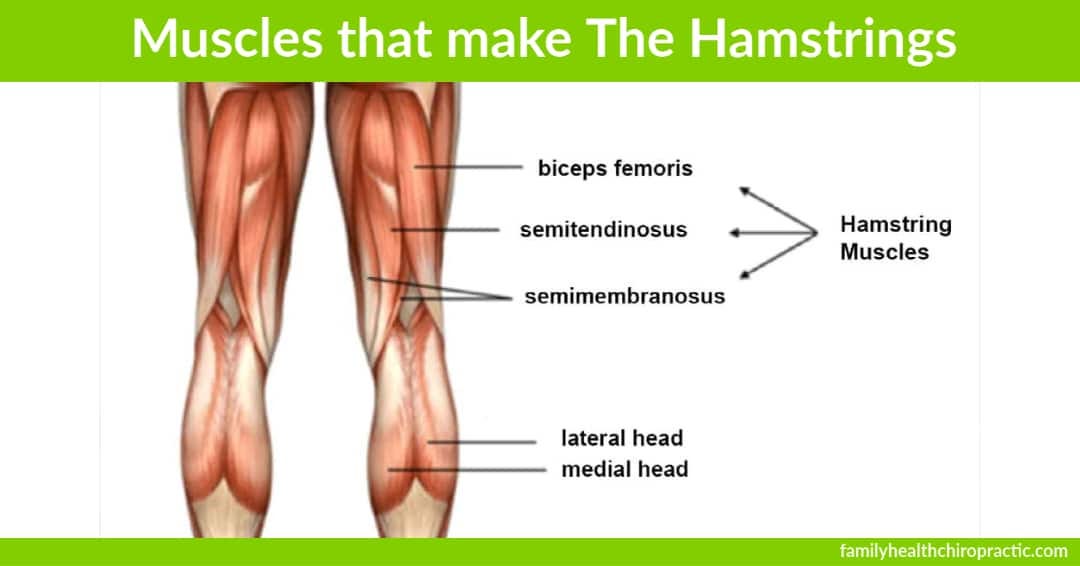
If the inner hamstring is underperforming, the body loses one of its natural tools for managing rotation. The burden shifts elsewhere, often to the lateral quad and hip structures.
Restoring balance here is not about randomly strengthening hamstrings. It is about identifying which fibers need to work and teaching them to do their job again.
Posture Drives Everything
Now we zoom out.
Most people presenting with knee pain are not just dealing with a local muscular issue. They are living in a global posture that predisposes them to it.
A common pattern we see is a PEC presentation. The lower back is extended. The pelvis is tilted forward. The ribs are flared. The body is biased toward external rotation.
When the pelvis is positioned in external rotation, the femur compensates with internal rotation. That rotation cascades down into the tibia and foot, setting up the torsion we discussed earlier.
This is not accidental. It is predictable.
Add to that the reality that the brain’s fight or flight system defaults to this extended, externally rotated posture, and you begin to see the full picture. A stressed nervous system reinforces the very mechanics that keep the knee irritated.
You cannot overlook this.
Fixing the Knee Is About Untangling the System
There is no universal knee protocol.
Fixing knee pain means identifying which pattern is dominant in that individual.
Is it an overactive Vastus Lateralis?
Is it a collapsing foot?
Is it quad imbalance?
Is it weak internal rotators?
Is it a global postural bias?
Is it a nervous system locked in protection mode?
Once the pattern is identified, the process becomes clear. Lengthen what is overly tonic. Strengthen what is underperforming. Restore rotational balance. Improve foot integrity. Reposition the pelvis and ribs. Calm the nervous system.
But like everything we teach at Saint Bartholomew, this cannot be addressed in isolation.
There is a respiratory component. If breathing mechanics are off, posture will not hold. There is a strength component. New patterns must be loaded and reinforced. There is an energy production component. The system must be able to sustain good mechanics throughout the day, not just for ten minutes in a clinic.
The knee is simply where the alarm bell is ringing.
The real work is bringing the entire system back into alignment.
When the femur and tibia no longer have to fight each other, when the foot supports instead of collapses, when the hamstrings and quads share the load appropriately, and when the nervous system no longer defaults to tension, knee pain often resolves far faster than people expect.
The knee is not fragile.
It is just misunderstood.
Sincerely,
Saint Bartholomew